Leveraging Semantic Mapping Tools to Organize Cross-Border Betting Data Networks
Mara Simon · Aug 3, 2026
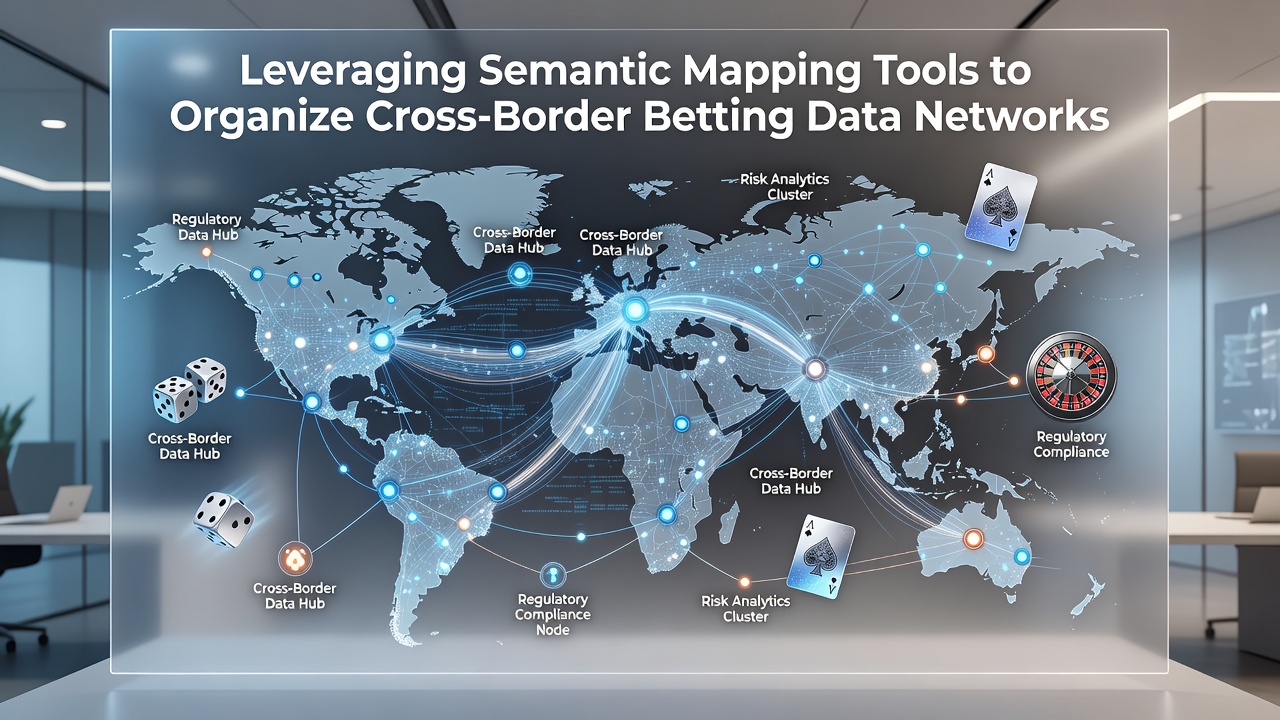
Leveraging Semantic Mapping Tools to Organize Cross-Border Betting Data Networks
Experts in data architecture have turned to semantic mapping tools to handle the growing complexity of cross-border betting data networks, where information flows between regulatory environments in North America, Europe, Asia, and Australia. These tools apply ontologies and relationship definitions to standardize terms such as "wager type," "player verification status," and "payout threshold" across jurisdictions that maintain distinct legal frameworks and reporting requirements. Data shows that operators managing multi-country platforms process thousands of daily transactions, each carrying metadata that must align with local rules on taxation, age verification, and responsible gambling disclosures.
Core Functions of Semantic Mapping in Wagering Ecosystems
Semantic mapping establishes consistent meaning between datasets by defining classes, properties, and constraints that remain stable even when source systems update their formats. Researchers at institutions studying information systems note that this approach reduces mismatches that occur when one jurisdiction classifies a bet as "fixed odds" while another labels the same activity under "pool betting" terminology. The mapping process links these variations through shared conceptual nodes, allowing queries to retrieve unified results without manual reconciliation at each step.
Implementation typically begins with the creation of a core ontology that captures essential betting concepts, then extends outward to incorporate regional variations through subclass relationships and equivalence statements. In August 2026, several platforms reported deploying updated mapping layers to accommodate new transparency rules emerging from regulatory reviews in multiple Asian markets, demonstrating how these tools adapt to shifting compliance landscapes without requiring full database rebuilds.
Integration with Existing Data Infrastructure
Teams integrate semantic mapping layers with graph databases and relational systems already used for transaction logging and player account management. The mapping layer sits above raw data stores, translating queries into forms that respect both technical schemas and regulatory semantics. This architecture supports real-time synchronization across borders, where a change in one market's reporting format propagates correctly to connected systems through defined inference rules rather than custom scripts.
Case studies from operators active in the Canadian and Australian markets illustrate the pattern. Data from these regions shows that semantic tools cut the time required to align new game offerings with local disclosure standards from weeks to days, because relationship definitions already encode how bonus structures interact with wagering requirements in each jurisdiction.

Handling Regulatory Variation Through Defined Relationships
Cross-border networks encounter frequent updates to rules on deposit limits, self-exclusion lists, and advertising standards. Semantic mapping addresses these variations by maintaining explicit links between regulatory concepts and operational data fields, so compliance checks can reference a single mapping rather than scattered documentation. According to reports from the Australian Communications and Media Authority, consistent semantic definitions have helped platforms maintain accurate player protection flags when users move between licensed environments.
Those managing large-scale deployments observe that inference engines built on semantic frameworks automatically flag potential conflicts, such as differing treatment of cryptocurrency transactions, before they reach production systems. The approach also supports audit trails because every mapping decision remains traceable through versioned ontologies rather than buried in procedural code.
Performance and Scalability Considerations
Scalability testing conducted by research groups focused on distributed information systems indicates that semantic mapping adds modest overhead during initial query planning yet delivers faster overall retrieval once indexes incorporate the relationship data. Platforms handling high-volume international traffic report improved consistency in bonus eligibility calculations and risk scoring when semantic layers enforce uniform interpretation across source feeds.
Maintenance of the mapping itself requires ongoing input from compliance specialists and data engineers who update concept definitions as new game mechanics or payment methods appear. This collaborative process keeps the ontology aligned with both business needs and regulatory expectations in multiple regions simultaneously.
Conclusion
Semantic mapping tools provide a structured method for organizing cross-border betting data networks by establishing shared meaning across diverse regulatory and technical environments. Their use supports consistent data interpretation, reduces reconciliation efforts, and adapts to evolving compliance requirements through explicit relationship definitions rather than repeated custom development. As international wagering platforms continue expanding, these tools offer a foundation for managing complexity while preserving accuracy across jurisdictions.