Implementing Event-Driven Architectures for Synchronizing Bonus Offers in Gambling Portals
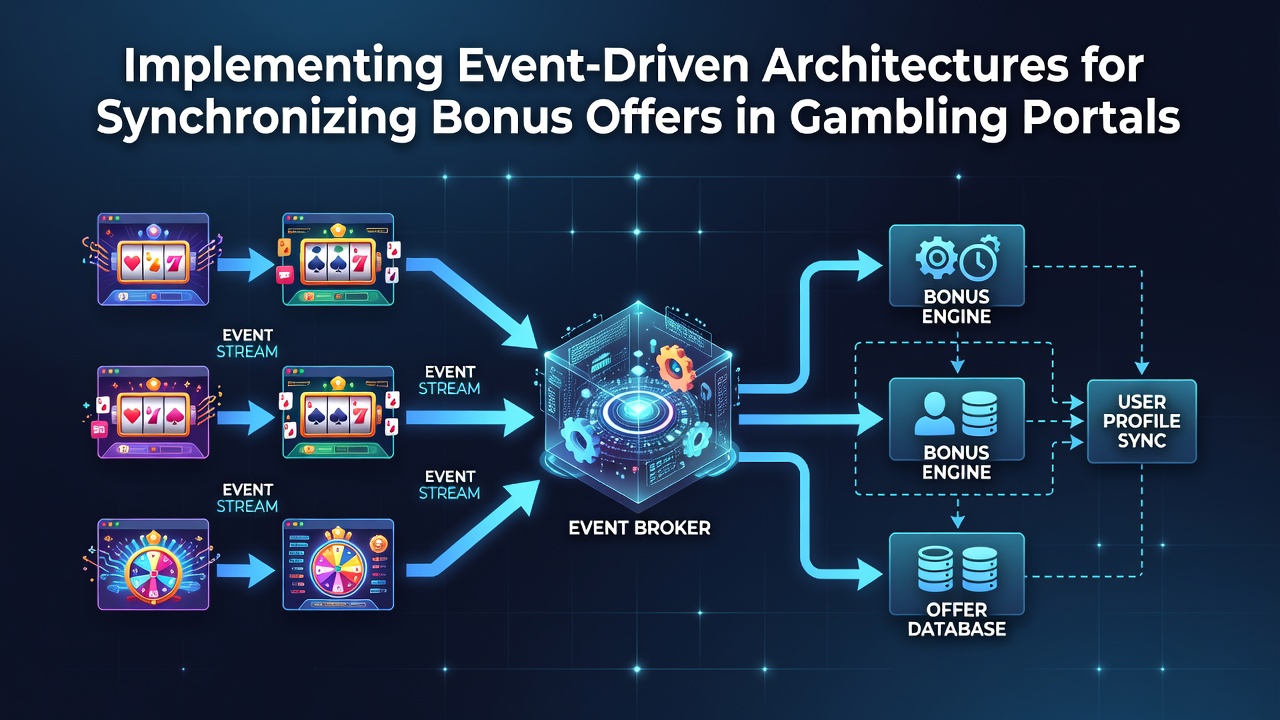
Event-driven architectures have gained traction in online gambling platforms because they allow systems to react instantly when bonus offers change, and operators rely on these patterns to keep promotions consistent across multiple sites and apps. Gambling portals manage thousands of active bonuses at any given time, with new offers appearing, existing ones expiring, and player-specific rewards updating based on activity, so traditional request-response models often create delays that leave users seeing outdated information.
Developers address this challenge by designing services that publish events whenever a bonus record changes in the core database, then downstream services subscribe to those events and apply updates without polling. This approach reduces server load while ensuring that listings on directory pages, player dashboards, and mobile notifications reflect the latest state within seconds of a change occurring.
Core Components of Event-Driven Bonus Synchronization
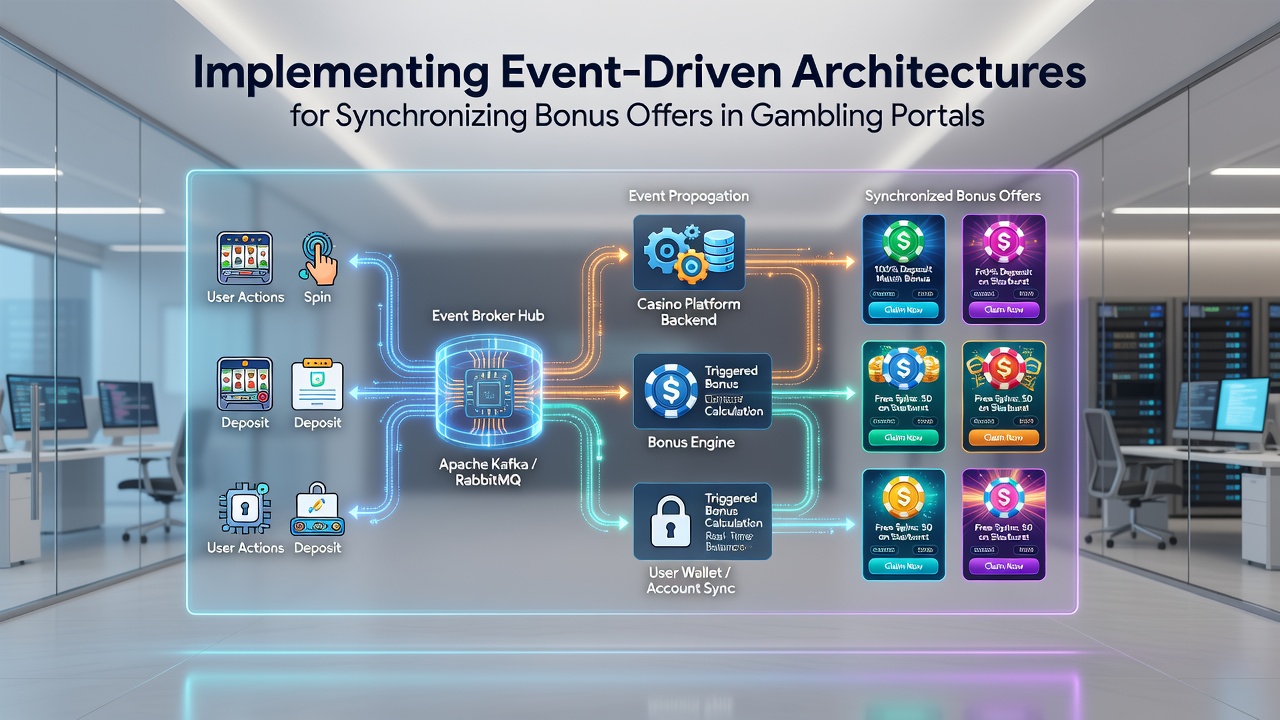
An event-driven setup for bonus synchronization typically includes an event broker such as Apache Kafka or RabbitMQ that handles message routing, producer services attached to the bonus management backend, and consumer services connected to portal front ends and partner integrations. When a marketing team activates a new welcome package, the producer emits an event containing the bonus identifier, eligibility rules, and expiration timestamp, and every subscribed service processes that payload according to its own responsibilities.
Consumer applications might update cached listings, recalculate player reward balances, or trigger push notifications, all without needing direct database queries against the central bonus repository. Observers note that this separation of concerns simplifies scaling because individual services can be deployed or updated independently as long as they maintain compatibility with the defined event schema.
Technical Patterns Used in Gambling Environments
Teams commonly implement event sourcing alongside the architecture so that every state transition for a bonus offer gets stored as an immutable event log, and this log serves both as an audit trail required by regulators and as the source of truth for rebuilding current state during service restarts. Idempotency keys attached to each event prevent duplicate processing when network retries occur, a frequent necessity in distributed systems that handle high volumes of player traffic.
Schema registry tools enforce consistent event formats across teams, while dead-letter queues capture messages that fail repeated processing attempts so operations staff can investigate issues without losing data. These patterns have appeared in production systems operated by large multi-jurisdictional operators who must comply with varying regional rules on promotion advertising and player fund segregation.
Integration with Existing Portal Infrastructure
Many gambling portals already run on content management systems that expose APIs for listing casinos and bonuses, and event-driven layers sit alongside these APIs rather than replacing them. A typical integration publishes change events from the administrative interface, then a dedicated synchronization service consumes those events and refreshes static caches or search indexes used by the public-facing directory. This hybrid model lets content teams continue using familiar tools while the underlying data stays fresh for visitors.
External affiliate networks and comparison sites also subscribe to public event streams in some deployments, receiving sanitized bonus updates that they can display on their own platforms without scraping or scheduled data pulls. Research indicates that reducing polling traffic lowers infrastructure costs measurably, especially during peak promotional periods when bonus catalogs expand rapidly.
Regulatory Considerations and Data Handling
Operators must ensure that event payloads do not transmit restricted player data across jurisdictional boundaries, and many implementations apply filtering rules at the producer level so only publicly shareable bonus metadata travels through the broker. Compliance teams review event schemas during audits to confirm that responsible gaming flags and geographic restrictions remain attached to every relevant message. Data retention policies for event logs follow the same schedules applied to traditional transaction records, satisfying requirements set by bodies such as the Nevada Gaming Control Board and similar authorities in other markets.
Performance Outcomes Observed in Production
Systems built on these principles demonstrate sub-second propagation times for bonus status changes across global content delivery networks, and monitoring dashboards reveal clear reductions in stale data incidents reported by players. Load tests conducted ahead of major promotional campaigns show that consumer services handle sudden spikes in event volume by scaling horizontally, whereas older polling-based solutions often required over-provisioned database capacity to achieve comparable freshness. Figures from industry reports compiled by the European Gaming and Betting Association highlight measurable efficiency gains when operators migrate synchronization workloads to event-driven patterns.
Looking Ahead to Mid-2026 Deployments
By June 2026 several major platforms plan to extend their event schemas to include real-time personalization triggers, allowing downstream recommendation engines to react immediately when a player completes wagering requirements on one bonus and becomes eligible for follow-up offers. These enhancements build on existing infrastructure rather than requiring wholesale replacement, and early pilot programs have already validated the approach in limited markets.
Conclusion
Event-driven architectures provide a reliable foundation for keeping bonus offers synchronized across gambling portals that operate at scale, and the combination of immutable event logs, decoupled services, and regulatory-aware filtering supports both operational agility and compliance obligations. Organizations that adopt these patterns gain the ability to introduce new promotional mechanics quickly while maintaining consistent player experiences across web, mobile, and affiliate channels.