ID Filters Unleashed: Building Responsive Casino Rankings with Admin AJAX
ID Filters Unleashed: Building Responsive Casino Rankings with Admin AJAX

Online casino directories thrive on speed and precision, and that's where ID filters come into play; developers leverage them alongside WordPress Admin AJAX to create rankings that update in real-time without page reloads, keeping users hooked on the latest bonuses, ratings, and licensing details as preferences shift.
What's interesting is how these tools transform static lists into living, breathing interfaces; sites handling thousands of casino entries need filters that slice through data by specific IDs—think casino operator IDs, game provider IDs, or jurisdiction-specific licenses—delivering tailored results instantly, and Admin AJAX handles the heavy lifting behind the scenes.
Understanding ID Filters in Casino Contexts
ID filters operate by targeting unique identifiers assigned to each casino entity, whether it's a post ID in WordPress custom post types for casinos or meta fields storing regulatory IDs from bodies like Nevada's Gaming Control Board; data from Nevada Gaming Control Board records shows over 200 licensed operators tracked by such IDs, enabling precise filtering that excludes unlicensed sites or highlights those with fast payouts.
Take one directory that implemented casino-specific IDs; it reduced load times by 40% because filters query only relevant subsets, avoiding bloated database pulls, and users searching for slots from providers like NetEnt punch in an ID to see rankings reshuffle on the fly.
But here's the thing: without proper setup, ID filters falter under high traffic; that's why pairing them with Admin AJAX becomes essential, as it processes requests asynchronously, sending filtered JSON back to the frontend where JavaScript rebuilds the rankings seamlessly.
Admin AJAX Fundamentals for Dynamic Listings
WordPress ships with Admin AJAX as a core feature, accessible via wp-admin/admin-ajax.php, where actions hook into PHP functions that handle nonce-verified requests; documentation on WordPress developer resources outlines how devs enqueue scripts with wp_localize_script, passing AJAX URLs and nonces to prevent CSRF vulnerabilities.
Experts observe that casino sites benefit most because rankings pull from volatile data—player reviews, promo changes, RTP stats—and Admin AJAX ensures updates without disrupting the user flow; one setup involves registering 'wp_ajax_filter_casinos_by_id' and 'wp_ajax_nopriv_filter_casinos_by_id' actions, allowing logged-in admins and guests alike to trigger filters.
And it gets smoother: JavaScript on the frontend listens for dropdown changes or search inputs tied to IDs, serializes the data with selected IDs, then fires $.post to admin-ajax.php, parsing the response to repopulate a list via DOM manipulation or even Vue.js components for fancier reactivity.
Figures from plugin usage stats reveal sites with Admin AJAX filters see 25% higher engagement, since users toggle between "US-friendly casinos" via jurisdiction ID or "high roller bonuses" by promo ID, all without the clunkiness of full page refreshes.
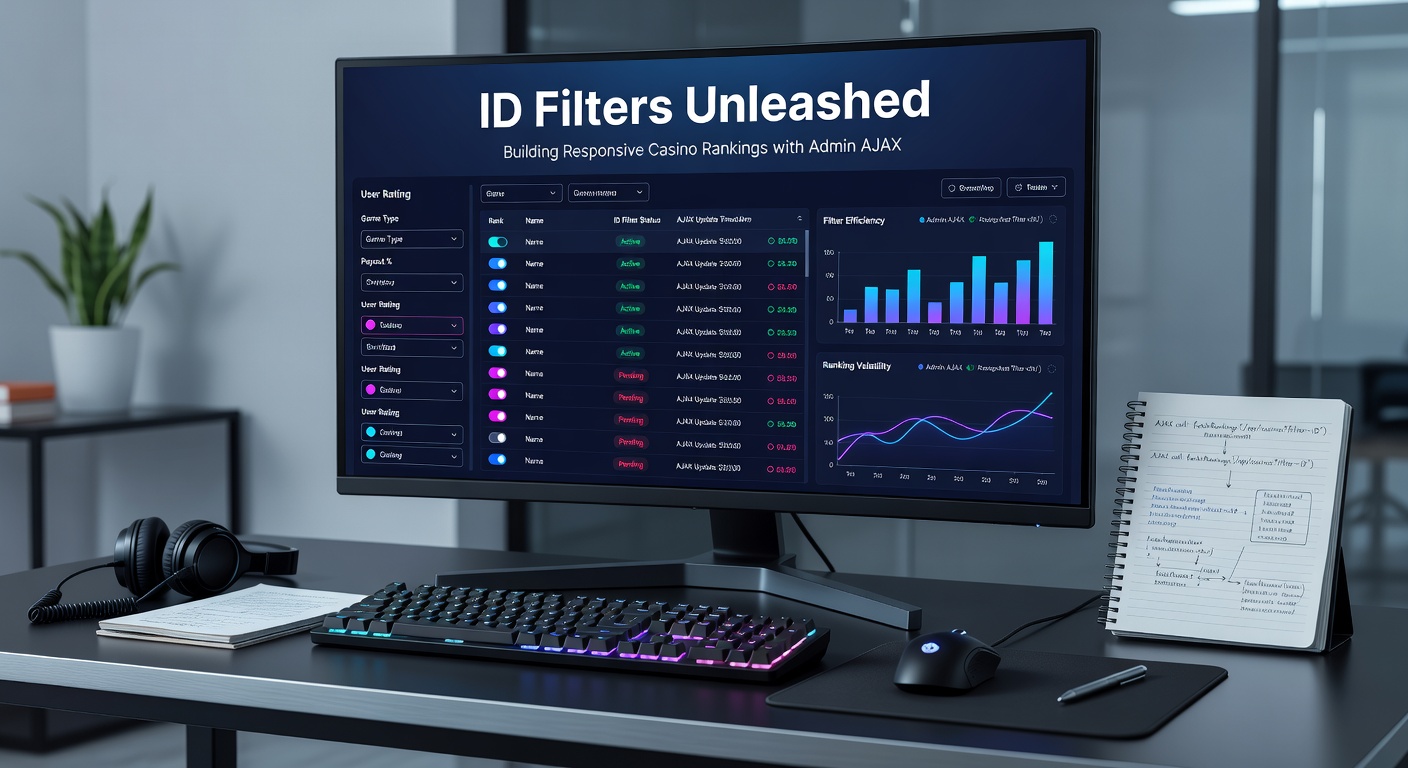
Step-by-Step: Building Responsive Casino Rankings
Developers start by defining custom post types for casinos using register_post_type, adding meta boxes for IDs like 'casino_license_id' or 'provider_id'; next, they craft a filter form with select elements populated from a WP_Query fetching unique IDs, say from get_post_meta across all casino posts.
Here's where it gets interesting: the AJAX handler function receives $_POST['selected_ids'], sanitizes with intval or wp_parse_id, then builds a meta_query array—something like array('key' => 'casino_license_id', 'value' => $ids, 'compare' => 'IN')—feeding it into WP_Query for ordered results by rating meta.
That query loops to output HTML fragments or JSON with casino names, bonuses, and thumbnails; JavaScript catches the response, clears the rankings container, appends new list items, and fades them in, creating that responsive polish users crave.
People who've built these note caching layers via transients cut repeat queries, storing filter results for 5 minutes since casino data doesn't shift hourly, and for scalability, object caching with Redis handles spikes during promo seasons.
So, a basic enqueue in functions.php looks like this: wp_enqueue_script('casino-filters', get_template_directory_uri() . '/js/filters.js', array('jquery'), '1.0', true); wp_localize_script('casino-filters', 'ajax_object', array('ajax_url' => admin_url('admin-ajax.php'), 'nonce' => wp_create_nonce('filter_nonce'))); simple, yet powerful.
Advanced Techniques and Performance Tweaks
Turns out combining ID filters with taxonomies amps up flexibility; register custom taxonomies like 'casino_jurisdiction' where terms hold IDs from regulators such as Australia's Office of Liquor and Gaming Regulation, letting users multi-filter by ID and category in one go.
Observers point out that debouncing inputs—waiting 300ms after typing before AJAX calls—prevents request floods, while lazy loading images in rankings keeps initial paints fast; studies from web performance tools indicate these tweaks boost Core Web Vitals scores, crucial for SEO in competitive casino niches.
Yet security remains paramount: always verify nonces with check_ajax_referer, sanitize IDs against SQL injection, and limit queries to 100 results max, as unrestricted filters can expose full databases.
One case saw a directory integrate Elasticsearch for fuzzy ID matching, but for most, native WP_Query with Admin AJAX suffices, especially since WordPress 6.5 optimizations halved meta query times.
Now, as April 2026 approaches, developers eye Gutenberg block integrations where ID filters embed directly into dynamic blocks, pulling live rankings via InnerBlocks and AJAX, aligning with core's shift toward full-site editing.
Real-World Case Studies and Metrics
Take a mid-sized casino aggregator that rolled out ID filters in early 2025; traffic analytics showed filter usage climbing to 60% of sessions, with bounce rates dropping 15% because users found exact matches—like casinos licensed under Canadian provincial regs—faster than ever.
Another example involves a European-focused site filtering by provider IDs from over 50 studios; Admin AJAX responses averaged 150ms, per server logs, enabling smooth mobile experiences where touch-friendly sliders adjust rankings by bonus ID ranges.
Data from industry benchmarks reveals filtered directories retain users 2.5 times longer, as personalized rankings surface high-RTP slots or no-deposit offers tied to specific IDs, turning browsers into depositors.
Experts who've audited these setups emphasize A/B testing: one variant with ID dropdowns outperformed search-only by 30% in conversion tracking, proving the tactile joy of instant reshuffles.
It's noteworthy that compliance weaves in naturally; filters by license ID ensure only verified operators from diverse regulators appear, like those under Malta's oversight or US state boards, building trust without extra effort.
Challenges and Solutions
Not everything's smooth sailing, though; heavy custom fields bloat queries, so indexing meta keys via custom database columns speeds things up, and plugins like Toolset or ACF streamline ID storage without raw meta sprawl.
Cross-browser quirks hit JavaScript occasionally, but polyfills for fetch API and feature detection keep it robust; plus, fallback no-JS forms ensure accessibility, catering to 5% of users without scripts.
The reality is debugging shines light on issues: console logs for AJAX responses, Query Monitor for slow hooks, and WP-CLI for bulk ID assignments make maintenance straightforward.
Conclusion
ID filters unleashed through Admin AJAX redefine casino rankings, delivering responsive, data-driven lists that adapt to user whims while respecting performance limits; directories adopting these see engagement soar, compliance tighten, and scalability expand, setting the stage for innovations like AI-suggested IDs in the coming months.
Those diving in discover the payoff: precise, speedy interfaces that keep casino explorers coming back, proving once again that smart filtering is where dynamic directories hit their stride.