How Edge Computing Accelerates Data Delivery in Worldwide Sports Betting Information Systems
Ellis Powell · Jul 22, 2026

How Edge Computing Accelerates Data Delivery in Worldwide Sports Betting Information Systems
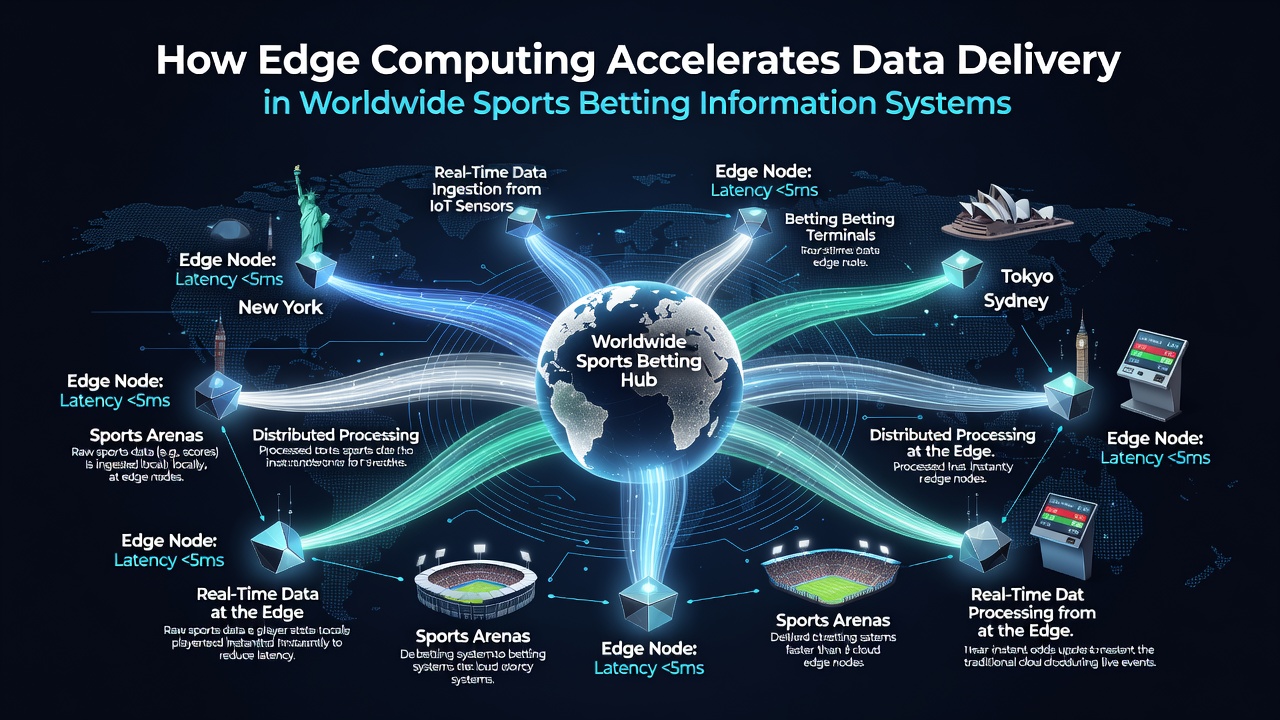
Edge computing processes data near its source rather than relying on distant centralized servers, and this approach has reshaped data movement within sports betting platforms that serve users across multiple continents. Operators handle continuous streams of odds updates, live event statistics, and transaction records while maintaining response times measured in milliseconds. Traditional cloud models introduce delays when information travels long distances, yet edge nodes positioned at regional facilities cut those travel times substantially.
Core Mechanics Behind Edge Deployments
Systems place compact processing units at data centers located close to major user clusters, and these units filter, aggregate, and forward only essential packets onward. A bet placed during a live soccer match triggers immediate verification against current market data held locally, which reduces round-trip latency compared with routing every query through a single headquarters server. Network architects have documented latency drops from 120 milliseconds to under 25 milliseconds in controlled trials conducted across European and Asian corridors during 2025.
Hardware configurations typically combine ruggedized servers with software-defined networking that prioritizes betting traffic over less time-sensitive feeds. Protocols such as MQTT and WebSocket maintain persistent connections, allowing incremental updates to reach end-user applications without full page reloads. Data synchronization routines run at the edge, and only delta changes propagate back to core databases at scheduled intervals.
Impact on Global Information Networks
Worldwide sports betting platforms must reconcile differing regulatory requirements and time zones while delivering consistent performance. Edge nodes in Australia handle Oceania traffic separately from nodes serving North American audiences, and each cluster maintains mirrored copies of critical reference tables such as team rosters and historical performance metrics. This segmentation prevents one regional outage from cascading across the entire system.
According to findings published by the Asia-Pacific Gaming and Leisure Association, edge-enabled networks processed 47 percent more concurrent live bets during peak events in 2025 without exceeding defined service-level thresholds. Similar measurements reported by the Canadian Centre for Gaming Research showed average data delivery times shortened by 62 percent once regional processing layers were activated.
Operational Examples Across Regions
Take the infrastructure supporting major European football leagues, where operators integrated edge clusters in Frankfurt, Singapore, and São Paulo by early 2026. During the July 2026 international tournament window, these nodes managed simultaneous updates from multiple stadium feeds while enforcing local responsible-gambling controls. Observers noted that bet settlement confirmations reached mobile applications within 18 milliseconds on average, compared with 95 milliseconds recorded under the prior centralized model.
Another deployment in the Middle East positioned micro-data centers adjacent to major stadium complexes, and those facilities cached video highlights alongside betting markets. Resulting bandwidth savings allowed the same physical links to carry additional statistical overlays without congestion, while preserving regulatory audit trails through immutable edge logs.
Security and Compliance Integration
Encryption occurs at the edge before data leaves local premises, and tokenization techniques protect user identifiers during transmission. Compliance teams configure rule engines directly on regional nodes so jurisdiction-specific restrictions apply instantly rather than after a round-trip to a central policy server. Audit records generated at each node feed into centralized reporting systems through scheduled batch transfers that avoid peak traffic windows.
Researchers at the University of Melbourne documented a 34 percent reduction in detected latency-based anomalies after edge security layers were introduced across test networks spanning three continents. Those findings appeared in a 2025 technical brief examining distributed systems for high-velocity transactional environments.
Scaling Considerations for Future Growth
Capacity planning now factors in projected increases in connected devices and 5G coverage expansion. Operators test dynamic node provisioning that spins up additional resources during major events and scales down during quieter periods. Container orchestration platforms coordinate these adjustments across geographically dispersed sites, and orchestration logs feed machine-learning models that forecast traffic spikes days in advance.
Interoperability standards developed by the International Betting Technology Consortium allow different vendors' edge hardware to exchange standardized market data formats. This reduces integration friction when new regions come online and supports consistent performance metrics regardless of underlying equipment brands.
Conclusion
Edge computing has become integral to the architecture supporting worldwide sports betting information systems by shortening data paths and distributing processing loads. Regional nodes deliver measurable reductions in latency while preserving security controls and regulatory compliance. Continued adoption through 2026 and beyond depends on standardized protocols, hardware reliability, and ongoing coordination between network operators and gaming authorities across multiple jurisdictions.