Decoding Regional Variations in Gambling Resource Accessibility Through Comparative Database Studies
Theo Richter · Aug 7, 2026

Decoding Regional Variations in Gambling Resource Accessibility Through Comparative Database Studies
Comparative database studies have become central tools for mapping how gambling resources reach different populations, and researchers compile regulatory filings, licensing records, and public health datasets to identify patterns that single-region analyses often miss. These projects draw from sources maintained by government agencies and academic institutions, allowing analysts to align variables such as treatment center density, online platform availability, and responsible gambling program reach across borders. The approach reveals consistent differences in service coverage that correlate with regulatory frameworks and population density metrics.
Database Integration Methods Across Jurisdictions
Teams aggregate information from state-level gaming commissions in the United States, provincial regulators in Canada, and national oversight bodies in Australia and parts of Europe, then normalize fields for direct comparison through structured query protocols. One study examined records spanning 2019 through August 2026 and found that regions with centralized licensing systems posted higher counts of licensed operators per capita than jurisdictions relying on fragmented local approvals. Analysts cross-referenced these counts against census data to calculate accessibility ratios, revealing that urban zones maintained roughly double the per-resident resource listings compared with rural counterparts in the same country.
Graph database techniques help trace connections between regulatory updates and changes in listed services, while relational models track longitudinal shifts in helpline staffing and self-exclusion program enrollment. Researchers apply filters to isolate variables such as language support availability and payment method diversity, then test correlations against demographic indicators. The resulting maps highlight clusters where resource density rises sharply near major transport hubs and drops in areas farther from regulatory headquarters.
Observed Patterns in Resource Distribution
Data from multiple comparative projects indicate that accessibility gaps widen when regions differ in digital infrastructure investment, wth higher broadband penetration linked to greater numbers of verified online support portals. Australian datasets, for instance, show stronger integration between state gambling help services and national reporting platforms than some North American counterparts, producing more complete coverage statistics. European records similarly reflect variations tied to differing implementation timelines for cross-border player protection standards.
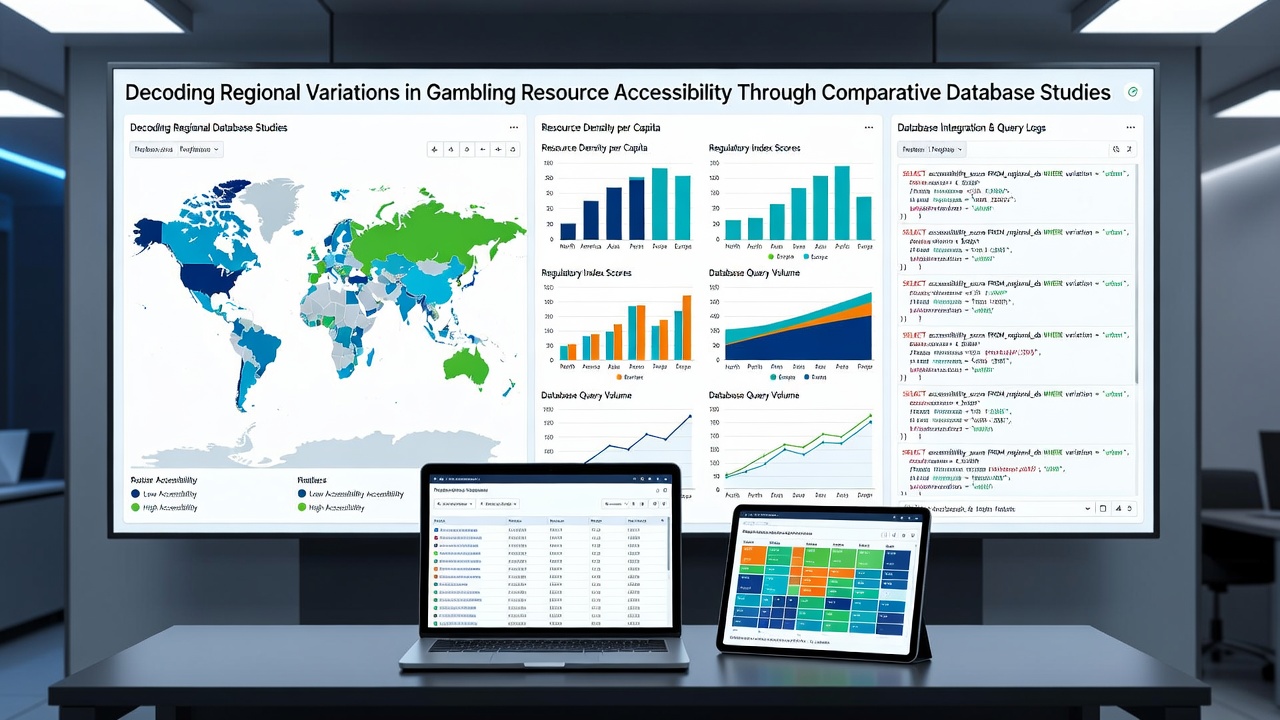
Studies that incorporate real-time API feeds from licensing authorities demonstrate how quickly new entries appear after policy changes, and these feeds allow analysts to measure lag times between regulatory approval and public listing. In one multi-country review, Canadian provinces updated operator directories within an average of 14 days, whereas certain U.S. state portals required up to 45 days for equivalent changes. Such timing differences affect how rapidly players can locate verified resources, and database queries flag these delays as measurable accessibility barriers.
Case Examples from Recent Comparative Work
A project coordinated by researchers at several universities matched records from the National Council on Problem Gambling in the United States with parallel collections maintained by the Australian Gambling Research Centre, producing side-by-side metrics on treatment facility distribution. The combined dataset covered 48 regions and identified that jurisdictions maintaining unified public registries achieved 30 percent higher documented coverage rates for multilingual resources. Another effort examined Asian markets through regulatory summaries released by authorities in Singapore and Macau, noting that centralized reporting produced clearer year-over-year trend lines than decentralized systems.
These examples illustrate how shared database schemas reduce duplication and improve the precision of cross-regional comparisons, yet they also expose gaps where certain resource categories remain under-reported. Analysts continue to refine matching algorithms to account for differing definitions of “accessible” across regulatory texts.
Conclusion
Comparative database studies supply structured evidence of how regulatory structures, infrastructure levels, and reporting practices shape gambling resource accessibility on a regional basis. Ongoing integration of new data streams through August 2026 and beyond will allow further refinement of these models, supporting more targeted allocation of services where coverage ratios remain lowest. The methods continue to evolve as additional jurisdictions contribute standardized records to shared repositories.